Explore The Region

Key Features and History
  • Seljuk Heritage: The castle was built by Seljuk Sultan Alaaddin Keykubat I , who conquered the city in 1221.
  • The Massive Walls: The walls, approximately 6.5 kilometers long, are equipped with 140 towers and around 400 cisterns.
  • UNESCO Nomination: Due to its unique Mediterranean defensive structure, it is included in the UNESCO World Heritage Tentative List .
Important Buildings to See
  1. Kızılkule (Red Tower): Built to protect the harbor, this octagonal structure has become a symbol of Alanya. It houses an Ethnography Museum .
  2. Shipyard: This was the first shipyard of the Seljuks in the Mediterranean and is one of the rare examples that has been preserved to this day.
  3. Inner Citadel: Located at the highest point of the peninsula, it is the administrative center containing the Byzantine church and Seljuk cisterns.
  4. Ehmedek: Located north of the main castle, this is the central section built to defend against attacks from the land.
Distance To The Hotel 43,6 km

Important Announcement: Reconstruction Process (2026)
  • Current Situation: The old museum building was demolished in September 2025. The artifacts are currently being preserved in temporary storage areas in the museum garden.
  • New Museum Goal: The Ministry of Culture and Tourism plans to complete a modern museum building, approximately twice the size of the current site (19,500 m² of indoor space), by the end of 2026 .
  • The Future of the Collection: Once the new building is completed, the aim is to increase exhibition capacity by 160%, making thousands of works currently stored in warehouses accessible to the public.
Distance To The Hotel 80,5 km

History and Structural Features
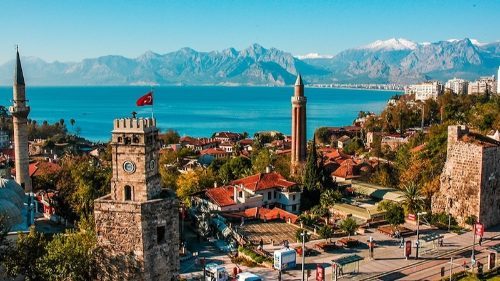
  • Construction Date: It is one of the clock towers built in 1901 to commemorate the 25th anniversary of Sultan Abdul Hamid II 's ascension to the throne.
  • Architecture: It has a square body structure built on a pentagonal plan. The stones used in its construction are part of the historical castle walls.
  • Restoration (2023-2024): It recently underwent extensive restoration. During this process, the reinforced concrete additions at the top of the tower were removed, and the dome structure and the historical clock mechanism were restored, remaining faithful to the original form.
Key Details
  1. Part of the City Walls: The tower is built on a bastion of the outer castle walls dating back to ancient times. In this respect, it presents Antalya's layered history (Roman, Byzantine, Seljuk, Ottoman) all at once.
  2. Location: It is located at the intersection of Kapalı Yol (Kazım Özalp Street), the city's main meeting point, and Kaleiçi , in the historic Clock Tower Square.
  3. Visual Spectacle: At night, the tower, illuminated alongside the fountains in the square, presents a breathtaking view.
Distance To The Hotel 78,3 km

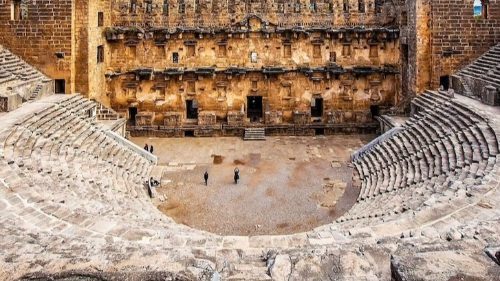
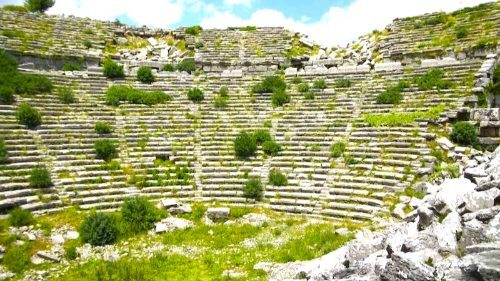
Located in the Serik district of Antalya, this world-renowned archaeological site is home to one of the best-preserved Roman theaters in the world. Built in the 2nd century AD by the architect Zenon, its massive theater still boasts excellent acoustics and structure, making it suitable for hosting concerts and festivals today.
 
Key Features and Structures
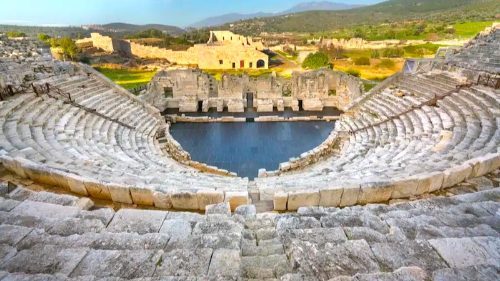
  • Ancient Theatre: This structure, with a capacity of approximately 12,000-15,000 people, was built during the reign of Roman Emperor Marcus Aurelius. Its unique feature is that its entire stage building (scaenae frons) remains standing.
  • Aqueducts: These aqueducts, which carried water to the city from miles away and whose approximately 1 km length is still preserved, are one of the peak examples of Roman engineering . They are included in the UNESCO World Heritage Tentative List.
  • Other Remains: On the acropolis hill behind the theater, the remains of the agora, basilica, nymphaeum (monumental fountain), and assembly building (bouleuterion) can be seen.
Distance To The Hotel 42,4 km

Key Features and Activity Areas
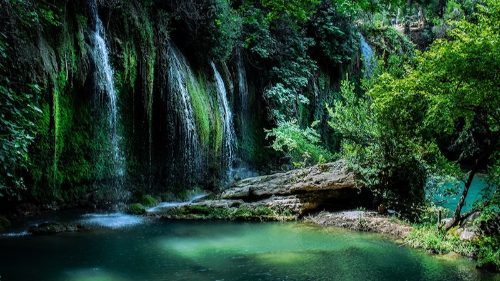
  • Rich Vegetation: The area around the waterfall is covered in a dense forest of plants including plane trees, laurel, wild rose, and oleander.
  • Hiking Trail: There is a very pleasant hiking trail, approximately 2 kilometers long, that winds through waterfalls and is adorned with plant tunnels and wooden bridges.
  • Wildlife: You can see freshwater turtles, ducks, and fish in the water; and if you're lucky, you might spot squirrels in the trees.
  • Historic Water Mill: Within the park, there is a historic water mill that is approximately 200 years old and still in working order.
Distance To The Hotel 73,1 km

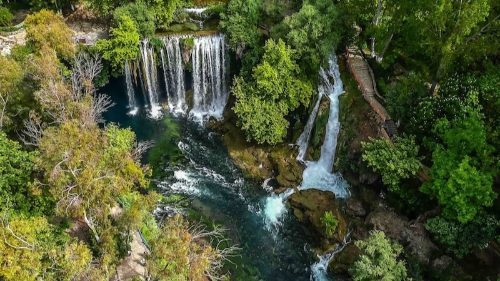
Upper Duden Waterfall (Iskender Waterfall)
Located in the Varsak district of Antalya, this area is a true nature sanctuary.
  • Cave Experience: Thanks to the enormous cave located behind the waterfall, you can watch the water fall from inside ; this is a very rare and refreshing experience.
  • Picnic and Tranquility: It is a lush green recreational area. Restaurants, cafes and rest areas are available.
  • A Historical Touch: Legend says that Alexander the Great watered his horses here, hence it is also known as "Alexander's Falls".
  • Introduction: Museum Card is not valid here. The approximate entrance fee for 2026 is around 50-60 TL .
 
Lower Düden Waterfall (Karpuzkaldıran)
It is located in the Lara region, very close to the city center.
  • The Magnificent Glory of Water Pouring into the Sea: This is one of the rare places in the world where water pours directly into the sea (from a height of approximately 40 meters).
  • Park Area: It's a large park (Düden Park) surrounded by scenery. Here you can walk, cycle, or sit by the cliffs.
  • Boat Tours: Approaching the point where the waterfall cascades by sea from the marina is one of the most popular activities.
  • Entry: Parking is free as there is a parking area.
Distance To The Hotel 79,0 km

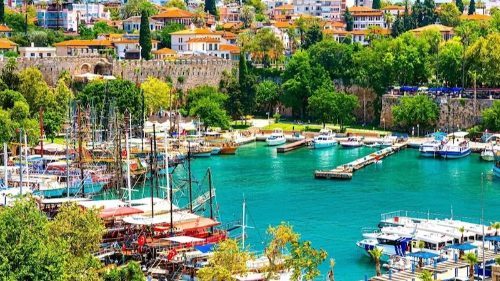
Considered the heart of Antalya, this fascinating old city district, with its labyrinthine streets, blends thousands of years of history from Roman times to the present day, seamlessly intertwining with modern life.
 
Historical Buildings You Must See
  • Hadrian's Gate (Three Gates): Built in 130 AD to commemorate the visit of Roman Emperor Hadrian to the city. It is the main entrance gate to the Old Town (Kaleiçi).
  • Fluted Minaret: Built in the 13th century by Seljuk Sultan Alaaddin Keykubat I, it is one of Antalya's first Islamic structures and the city's most prominent landmark.
  • The Broken Minaret (Korkut Mosque): Originally an ancient temple, it was later converted into a church and then a mosque, best reflecting the city's layered history.
  • Hıdırlık Tower: A magnificent 2nd-century Roman tower rising from the corner of Karaalioğlu Park, right by the sea.
Kaleiçi Experience
  1. Narrow Streets and Ottoman Houses: Walking among the historic houses with white walls, red tiled roofs, and bay windows, you feel like you're in a time machine.
  2. Marina: Accessible via steep stairs or an elevator, the marina is the departure point for day boat tours. It's perfect for watching the sunset.
  3. Mermerli Beach: A boutique and historic beach located at the foot of the cliffs, right next to the harbor.
  4. Cafes and Nightlife: Boutique hotels, stylish restaurants, and venues with live music located in the courtyards of historic buildings add a unique atmosphere to the area in the evenings.
Distance To The Hotel 78,3 km

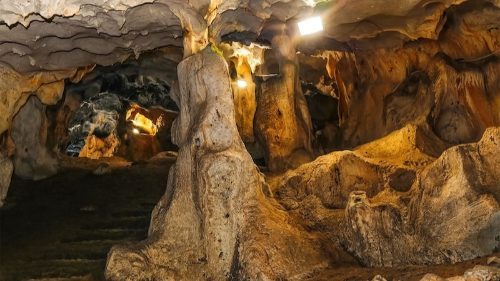
Located in the Döşemealtı district of Antalya, this is Türkiye's largest natural cave with settlements dating back approximately 500,000 years. Shedding light on the prehistoric (Paleolithic) period of Anatolia, this cave holds unique importance for world archaeology.
 
Historical and Archaeological Significance
  • Continuous Settlement: It shows evidence of uninterrupted settlement from the Lower Paleolithic period to the Roman period.
  • Neanderthal Traces: Bone remains belonging to Neanderthal humans have been found in excavations.
  • UNESCO Nomination: It has been on the UNESCO World Heritage Tentative List since 1994.
  • Cultural Layers: The cave contains a thick cultural deposit, approximately 11 meters in diameter.
Distance To The Hotel 96,6 km

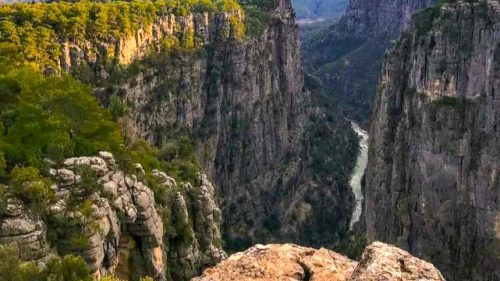
Also known as the Valley of Wisdom , this natural canyon, located within the Köprülü Canyon National Park in the Manavgat district of Antalya, is famous for its giant cliffs approximately 200 meters deep and breathtaking views . Particularly popularized by social media posts, this area is an indispensable destination for nature photography and adventure sports.
 
Key Features and Activities
  • Panoramic View: The furthest point of the canyon offers a breathtaking viewing platform from which you can watch the Köprüçay River winding its way below.
  • Adrenaline Sports:
  • Zipline: One of Europe's highest ziplines is located here; it is 1,960 meters long and 410 meters high.
  • Rafting: Canyon visits are often combined with rafting tours in Köprülü Canyon.
  • Safari: Jeep and buggy safari tours are quite common in the region.
  • Hiking: There are approximately 11 km of trekking routes around the canyon.
Distance To The Hotel 58,2 km

Located in Kumluca district of Antalya, this unique destination is known for its beach hidden among ancient ruins, its famous tree houses, and its bohemian atmosphere surrounded by nature .

1. Ancient City Of Olympos

Founded in the 2nd century BC, this port city was one of the most important members of the Lycian League.

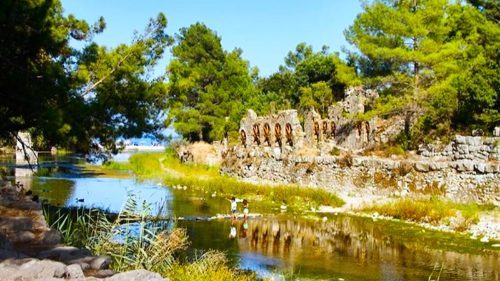
  • Ruins: You can explore the remains of a Roman temple gate, theater, basilica, and baths scattered between the forest and the stream bed that runs through it.
  • Admission: Museum Card is valid. The entrance fee for foreign visitors in 2026 is approximately €10.
  • Beach Path: To reach the beach, you need to walk through the ancient city, in the shadow of history, for about 10-15 minutes.

2. Olympos Beach

Nestled between steep cliffs, this beach, a mix of sand and pebbles, boasts some of the clearest waters in the Mediterranean.

  • Naturalness: As it is a protected area, there are no sun loungers, umbrellas, or businesses on the beach; it is completely pristine.
  • Turtles: This is also a nesting area for Caretta Caretta turtles.

3. Yanartaş (Chimaera)

Located in the village of Çıralı, right next to Mount Olympos, these are natural gas flames that have been continuously emerging from between the rocks for thousands of years.
  • Legend: It is believed that the Chimaera, the fire-breathing monster from Greek mythology, lived here.
  • Tip: Going out near sunset and cooking sausage sandwiches or brewing tea over the flames is a classic Olympos activity.
Distance To The Hotel 103,4 km

Located in the Manavgat district of Antalya, at an altitude of approximately 1,250 meters in the Taurus Mountains, is a magnificent ancient settlement known as "Pisidia in the Mountains". Situated within the boundaries of Köprülü Canyon National Park, this city has largely preserved its historical character thanks to its challenging accessibility.
 
Key Features and Structures
  • Ancient Theatre: It is the best-preserved structure in Selge. With a capacity of approximately 9,000 people, this theatre, nestled against the mountainside, overlooks a magnificent natural landscape.
  • Adam Kayalar (Conglomerate Rocks): Located on the Selge road and nicknamed "Antalya's Cappadocia," these fascinating 65-million-year-old rock formations offer a fantastic sight reminiscent of the movie "Avatar."
  • Stadium and Basilica: Located in the city center, the stadium and the remains of a Byzantine-era basilica prove how important a center of trade and religion the city once was.
  • Lycian Way Connection: The region is one of the popular routes for nature walkers (trekkers).
Distance To The Hotel 68,5 km

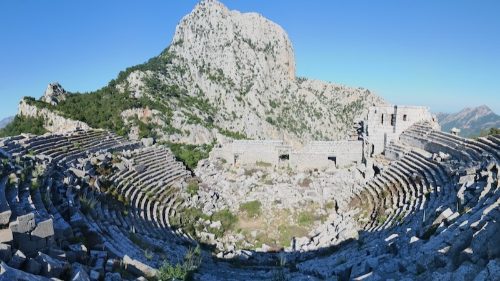
Located approximately 30 km northwest of Antalya, on the summit of Mount Güllük (at an altitude of 1665 meters), it is one of Türkiye's most magnificent and best-preserved ancient cities. Also known as the "Eagle's Nest," this city is famous for being one of the rare places that Alexander the Great besieged but failed to conquer.
 
Key Features and Structures
  • Impenetrable Defense: The people of Termessos, who lived in the Pisidia region, maintained their independence for a long time thanks to their warrior spirit and the strategic location of the city on steep cliffs.
  • Ancient Theatre: With a capacity of approximately 4,200 people, it is one of the world's most impressive theatres with stunning views. The view of the cliff and the Taurus Mountains stretching behind the theatre is breathtaking.
  • The Royal Street and Temples: The city contains the ruins of six temples, most notably Zeus Solymeus, and a massive agora.
  • Necropolis (City of Burial Ground): Huge sarcophagi adorned with low-relief carvings are scattered throughout the city, creating a highly mysterious atmosphere.
Distance To The Hotel 101,7 km

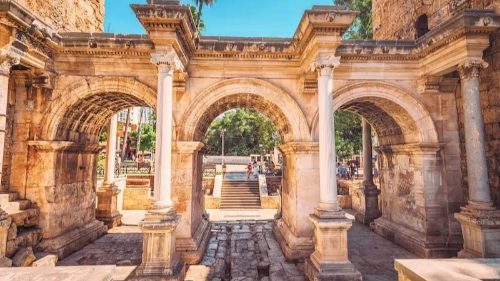
Known popularly as the Three Gates , it is one of Antalya's most iconic and best-preserved historical structures. Located at the entrance to Kaleiçi (the old town), this magnificent gate is like a gateway that connects the ancient spirit of the city with the modern urban environment.
 
History and Significance
  • Emperor's Visit: It was built in honor of Roman Emperor Hadrian 's visit to Antalya in 130 AD.
  • Architectural Structure: The gate, made of white marble, is in the form of a three-arched triumphal arch. Its columns are decorated in the Corinthian style.
  • Preservation: The gate has survived to this day in incredible condition because it was used as part of the city walls and its exterior was sealed off for centuries.
Distance To The Hotel 78,0 km

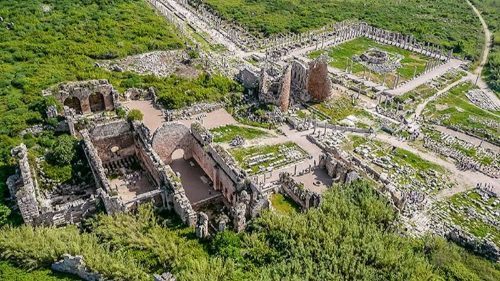
Located in the Aksu district of Antalya, Perge is one of the world's most well-preserved and magnificent ancient cities, having experienced its golden age during the Roman period, starting from the Hittite era. Included in the UNESCO World Heritage Tentative List, Perge is renowned for its architecture and school of sculpture.
 
Key Features and Structures
  • Massive Stadium: With a capacity of approximately 12,000 people, this stadium is one of the best-preserved ancient stadiums in the world.
  • Colonnaded Street and Water Canal: A water canal is located in the very center of the main street that runs through the middle of the city. This system was used in ancient times to cool the city.
  • Hellenistic Gate: A magnificent gate with two towers, a symbol of the city. A courtyard of honor was added behind it during the Roman period, adorned with statues of emperors and gods.
  • Roman Baths: The bath complex in Perge is notable for its underfloor heating systems and spacious halls, which were engineering marvels of the time.
  • Theatre: Known for its 13,000-seat capacity and unique reliefs in the stage building (Some sections may be closed periodically for restoration).
Distance To The Hotel 68,3 km

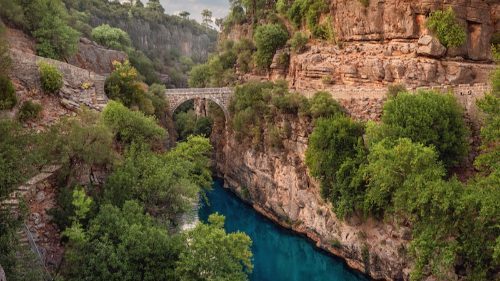
Located in the Manavgat district of Antalya, this natural wonder stretches along the turquoise Köprüçay River and is one of Turkey's most popular rafting centers . Declared a National Park in 1973, this area is a unique destination for both adventure enthusiasts and history buffs.
 
Key Features and Activities
  • Rafting Excitement: Rafting tours suitable for all levels are organized on the approximately 14 km long course. The water temperature is cool year-round (approximately 9 degrees Celsius).
  • Historic Bridges: The Oluk Bridge and Büğrüm Bridge, which give the canyon its name and date back to the Roman period, are still in use as engineering marvels.
  • Outdoor Sports: Many activities can be enjoyed in the canyon, such as canoeing (zipline), rock climbing, trekking, and jeep safari.
  • Cypress Forests: The region is of great botanical value as it is home to the world's largest natural pure cypress forest.
Distance To The Hotel 62,6 km

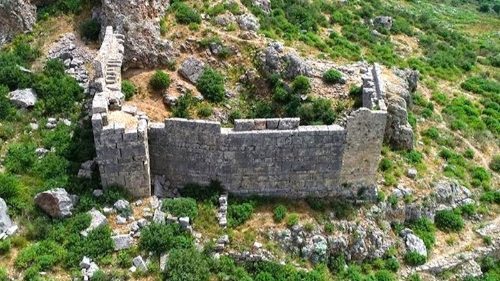
Located in the Serik district of Antalya, on a high plateau overlooking the plain, this mysterious ancient city, despite its thousands of years of history, has remained untouched by mass tourism. Believed to have been founded by heroes after the Trojan War, this city, like Termessos, is one of the places that Alexander the Great besieged but could not conquer.
 
Key Features and Structures
  • Impregnable Location: Situated on a steep hill, it resembles a natural fortress. Its defensive walls still stand majestically today.
  • Landslide and Nature: A section of the city was swept down a cliff by a major landslide in the past. While this resulted in the destruction of half of the ancient theater, it also adds a dramatic and impressive atmosphere to the city.
  • Architectural Diversity: You can see traces of the Hellenistic, Roman, Byzantine, and Seljuk periods all together. The small mosque dating from the Seljuk period, in particular, demonstrates the city's importance during the Turkish era.
  • Stadium and Towers: The remains of the stadium and massive towers are noticeable on the western slope of the plateau.
Distance To The Hotel 59,4 km

Located 50 kilometers from the Antalya-Burdur highway, nestled on the steep slopes of the Taurus Mountains, this impressive Pisidian city is known as a "gateway city." Particularly famous for its massive entrance gate, the city is renowned for its pristine atmosphere, nestled amidst nature.
 
Prominent Buildings and History
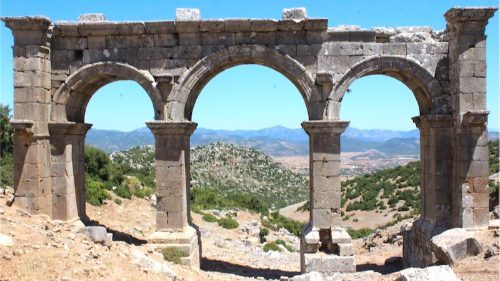
  • The Monumental Gateway (Three Gates): This is the city's most magnificent structure. Built in the 3rd century AD, this Roman triumphal arch, with its three arches, resembles Hadrian's Gate but rises amidst a much more wilderness.
  • Necropolis and Sarcophagi: In the valley at the entrance to the city lie massive stone sarcophagi and monumental tombs characteristic of Pisidian culture. Although some have been toppled by earthquakes, they are still very impressive.
  • Walls and Theatre: The city walls and the remains of a small theatre symbolize the defensive strength of the settlement, which was built on steep cliffs.
  • Roads: In ancient times, the city was located on a strategic road route connecting the Mediterranean to Central Anatolia.
Distance To The Hotel 109,4 km

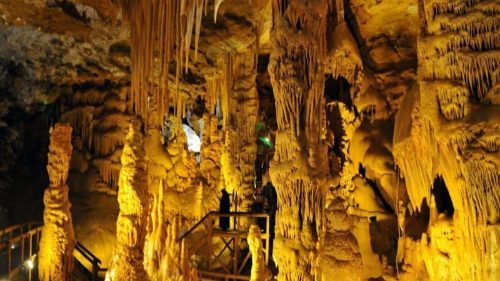
Located in the Serik district of Antalya, it is a fascinating natural wonder, described as a "living museum," whose formation has continued for millions of years. It was discovered accidentally during quarrying operations in 1997.
 
Key Features and "Pasta" Pendant Lights
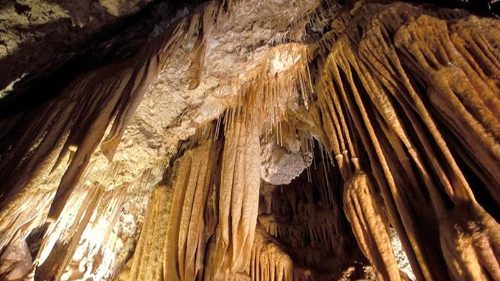
  • Unique Stalactites: The most distinctive feature that sets this cave apart from others in the world is its extremely thin and delicate formations, known as "spaghetti stalactites," which range in size from 5 to 70 centimeters.
  • Living Cave: Stalactite formation is still actively ongoing within the cave. Because of this feature, it has the status of a "living cave".
  • Double-Story Structure: The cave consists of two interconnected levels. The upper level, which is open to tourism, is approximately 232 meters long.
  • Air Quality: The cave has a humid and cool atmosphere, which is said to be beneficial for some respiratory ailments.
Distance To The Hotel 54,2 km

Located near Kaş in Antalya, this is a very special port city that served as the capital of the Lycian League and housed the first democratic assembly building in history. It is a captivating destination with both its archaeological richness and its enormous 18-kilometer-long beach.
 
Prominent Buildings and Historical Significance
  • The World's First Assembly Building (Bouleuterion): This building, the administrative center of the Lycian League, was restored in 2010. Montesquieu, in his book "The Spirit of the Laws," described the Lycian form of government as "the most perfect model of a republic known in history."
  • Ancient Lighthouse: Built by Emperor Nero in 64 AD and now restored, it is one of the oldest lighthouses in the world.
  • Santa Claus's Birthplace: Saint Nicholas, known as "Santa Claus," was born and raised in Patara in the 4th century AD.
  • Modem Wireless Station: The first wireless telegraph station established by the Ottoman Empire in 1906 to communicate with Libya is also located in Patara.
Distance To The Hotel 206,8 km

Located in the Manavgat district of Antalya, Side is a peninsula where history and the sea intertwine, and it is one of the most important port cities of the Roman and Byzantine periods. What distinguishes Side from other ancient cities is that the modern settlement (Side market and houses) continues right on top of and within the ancient ruins.
 
Prominent Buildings and Landmarks
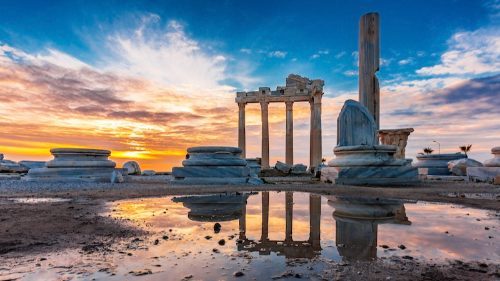
  • Temple of Apollo: The most famous symbol of Side. The massive white marble columns rising from the sea offer a captivating view, especially at sunset. Legend says that Antony and Cleopatra met here.
  • Ancient Theatre: This massive structure, with a capacity of approximately 15,000 to 20,000 people, differs architecturally from other Roman theatres in that it was built on arches instead of leaning against a hillside.
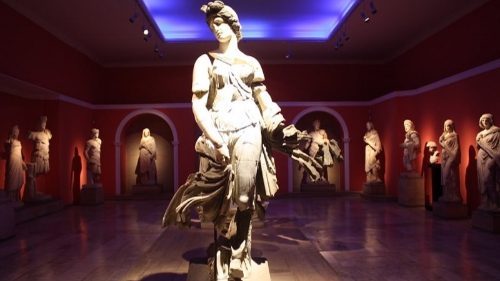
  • Side Museum: Created by restoring an ancient Roman bath, the museum houses unique sarcophagi and sculptures unearthed from the ancient city.
  • Monumental Fountain (Nymphaeum): This magnificent structure with nine fountains, located at the entrance to the city, reflects the engineering and aesthetic understanding of the ancient period.
  • Glass-Floored Walkways: While walking through Side's bazaar, you can see Roman-era ruins and ancient sewage systems through glass panels beneath your feet.
Distance To The Hotel 15,9 km

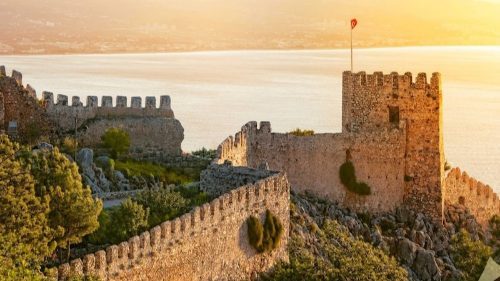
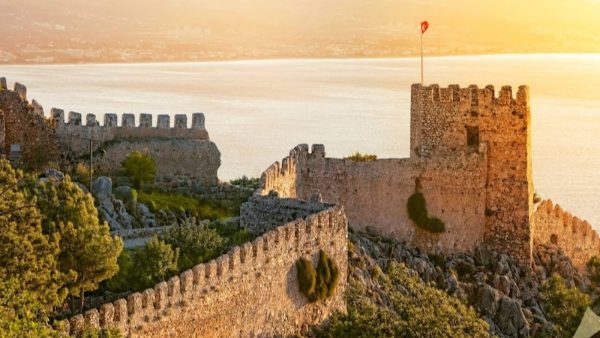
Built on a steep peninsula 250 meters above sea level, with its 6.5-kilometer-long walls and breathtaking Mediterranean views, it is the most magnificent symbol of Alanya. It was brought to its present splendor by the Seljuk Sultan Alaaddin Keykubat I, who conquered the city in 1221.
 
Featured Sections and Structures
  • Red Tower: A massive octagonal tower built to protect the harbor. It houses an Ethnography Museum and is the best-preserved part of the fortress.
  • Inner Citadel: This is the administrative center located at the highest point of the peninsula. Here you will find the remains of a Seljuk palace, cisterns, and a Byzantine church.
  • Shipyard: This was the first shipyard of the Seljuks in the Mediterranean. Viewed from the sea, it is notable for its five-arched structure and looks magnificent with its lighting in the evenings.
  • Adam Atacağı: Located northwest of İçkale, this is a steep cliff where, according to legend, those condemned to death threw stones as a good luck charm before being thrown into the abyss.
Distance To The Hotel 43,6 km

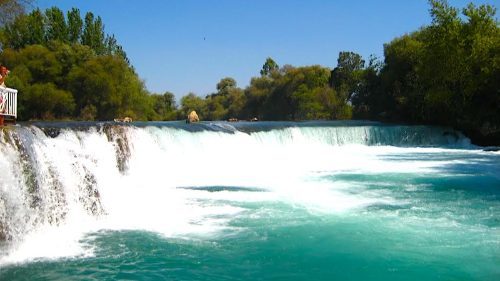
Located in the Manavgat district of Antalya, it is one of Türkiye's most famous natural wonders, known not for its waters cascading down from a high cliff, but for their roaring flow over a wide area.
Distance To The Hotel 12,6 km

Discovered accidentally in 1948 during the construction of the Alanya pier as a result of a dynamite explosion, it is Türkiye's first cave opened to tourism. It is located on the western coast of Alanya Castle, right at the entrance of the famous Damlataş Beach.
 
Key Features and Health Benefits
  • A Formation Spanning Thousands of Years: The stalactites and stalagmites inside the cave are estimated to date back to 15,000 BC.
  • Asthma Cave: The cave's air is known for being beneficial to asthma sufferers due to its high carbon dioxide content (10-12%), high humidity (95%), and constant temperature (22-23°C).
  • Treatment Courses: Patients who come under the supervision of a doctor undergo 21-day treatment courses by staying in the cave for specific periods in the mornings (before it opens to visitors).
  • Atmosphere: The cave is approximately 30 meters long and 15 meters high. It has a two-story structure.
Distance To The Hotel 43,0 km

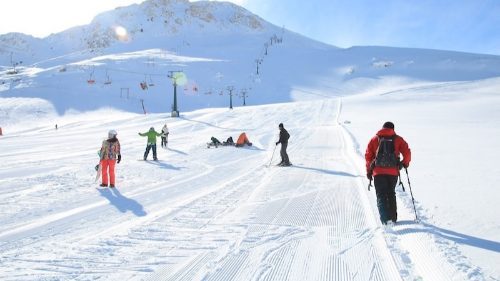
Located just 45 kilometers from Antalya city center, on the slopes of Bakırlıdağı in the Beydağları mountains, it is a unique winter sports center known for its slogan "Skiing during the day, sea in the afternoon".
 
Key Features and Runways
  • Location and Altitude: It is located at an altitude of approximately 2,400-2,550 meters. Offering the pleasure of snow while being so close to the Mediterranean is a rare feature in the world.
  • Track Options: There are 4 main tracks suitable for all skill levels:
  • Red Track: For professionals, steep and winding.
  • Black Track: A steep track starting from the highest point.
  • Blue Slope: For intermediate skiers.
  • Yellow Track: For beginners and trainees.
  • Facilities: There are chairlifts, ski lifts, and baby-lifts with a capacity of 1200 people per hour.
Distance To The Hotel 109,7 km